

Gyeongju Integrated Cultural Library
| Completion year | 2025 |
| Site location | 경상북도 경주 |
| Site area | 30,000m² |
| Building footprint | 5,998.06㎡ |
| Gross floor area | 11,096.92㎡ |
| Structural engineer | 서울구조 |
| Mechanical engineer | 디이테크 |
| Electrical engineer | 대경전기 |
| Landscape | 스튜디오201 |


| Completion year | 2025 |
| Site location | 경상북도 경주 |
| Site area | 30,000m² |
| Building footprint | 5,998.06㎡ |
| Gross floor area | 11,096.92㎡ |
| Structural engineer | 서울구조 |
| Mechanical engineer | 디이테크 |
| Electrical engineer | 대경전기 |
| Landscape | 스튜디오201 |
경주 문화 도서관, 일어서는 역사의 풍경
책은 한 개인이나 집단에 의해 쓰여진 과거의 기록이지만, 그 속에 담긴 사유와 증언은 현재의 우리를 일깨우며 새로운 혜안을 갖게 하여 미래로 나아가게 하는 중요한 수단이다. 따라서 이러한 책을 보관하며 전하는 도서관은 지식과 지혜의 박물관으로 우리를 발견하게 하는 보물창고였다. 그러나 오늘날 창조적 기능이 더해진 현대에는, 단순히 기록을 전하는 박물관의 성격에서 떠나 문화적 복합체로서 역사를 생성하는 현장의 성격이 더욱 요구된다. 즉 끊임없이 우리를 선도하며 일어서게 하는 역사의 풍경이 현대의 도서관이어야 한다는 것이다.
살아서 일어서는 역사, 이 풍경 속에서 우리는 우리의 자아를 넘어 타자를 만나고 가치를 교환하며 더나은 사회공동체를 꿈꿀 수 있을 것이다. 더구나 천년의 고도 경주는 대단히두터운 역사의 층위를 실제로 땅속에 가지고 있다. 이 오래된 역사의 땅을 들춰 미래로 도약하는 발판으로 삼는 일이 경주에 지어야 하는 건축이 가진 바른 풍경이며 임무이다.
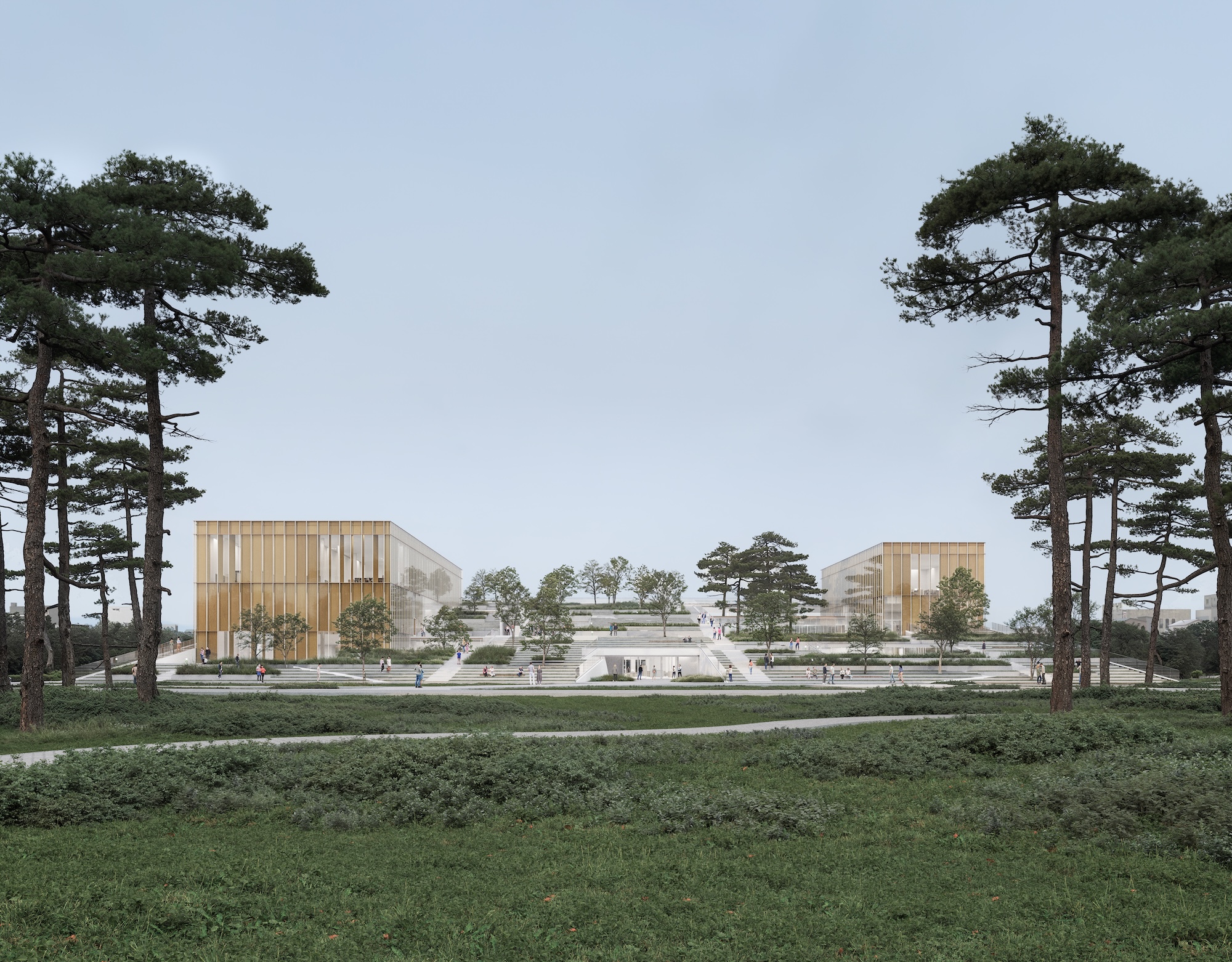
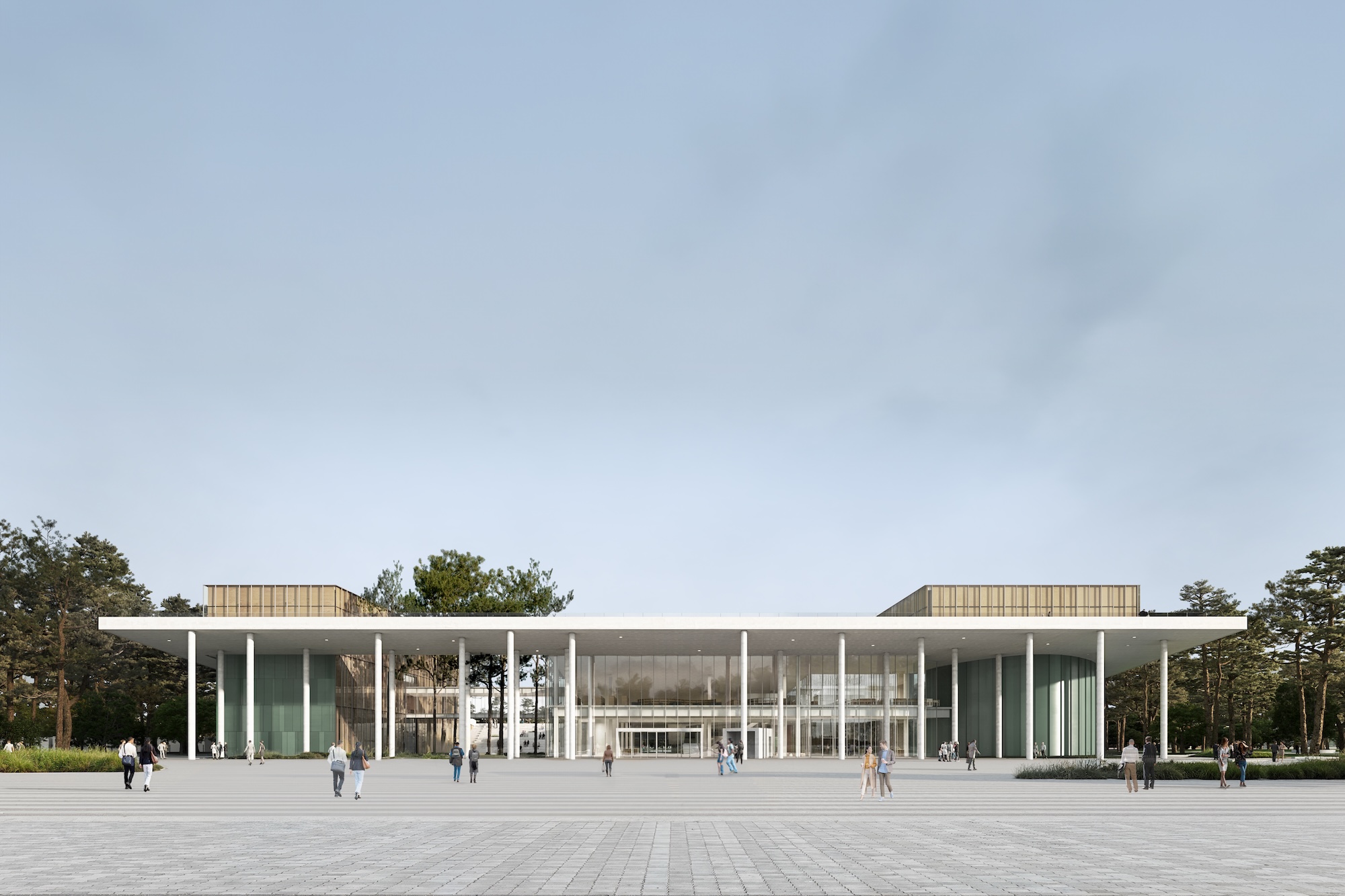
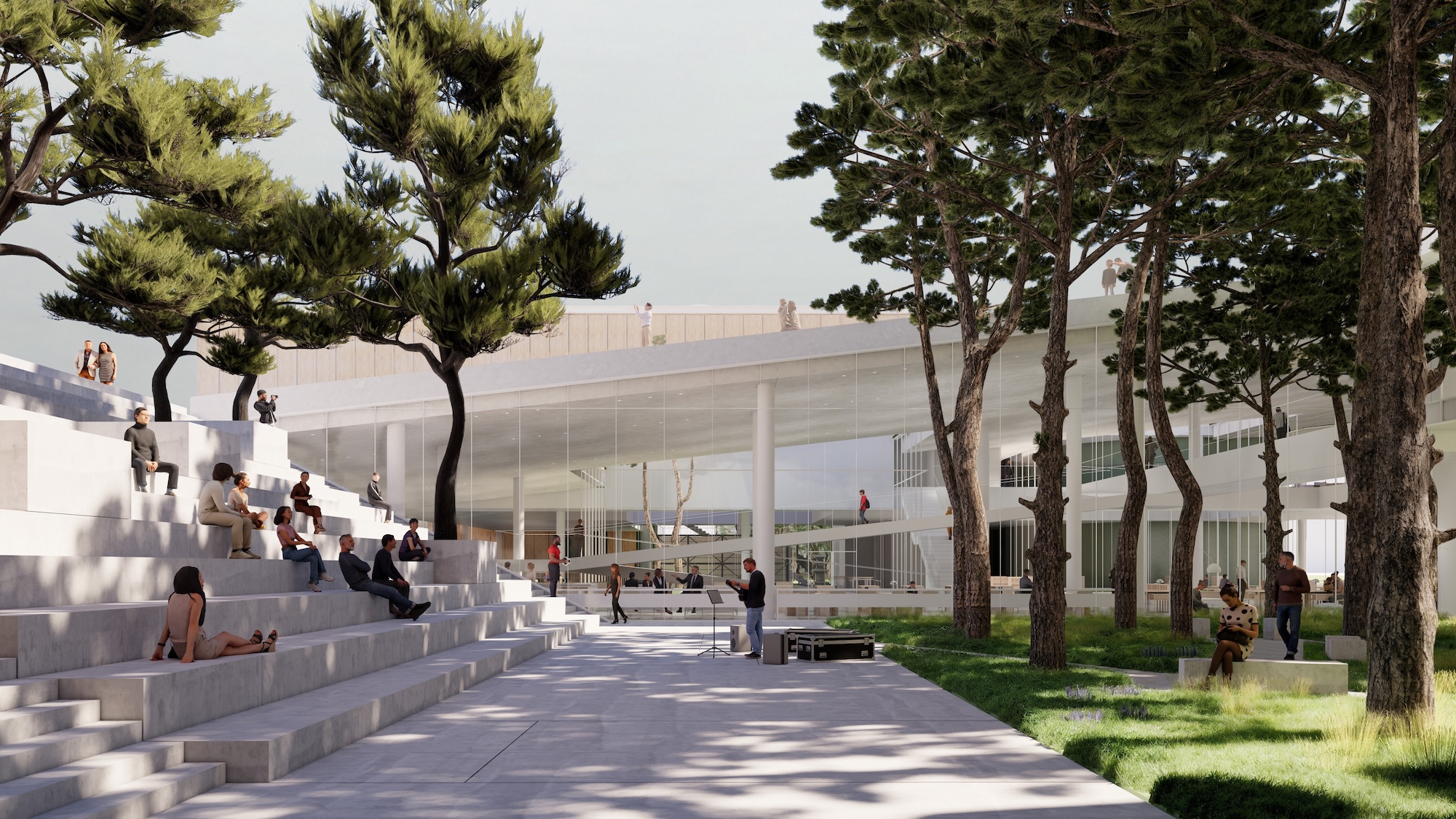
경주복합문화도서관은 도시와 공원의 경계에 위치한다. 북쪽 도시에서는 도시의 연장으로 공원으로의 입구이며, 남쪽 공원에서는 공원의 연장이며 도시로의 관문이다. 이를 적극적으로 매개하는 경주복합문화도서관은 들려진 공원 속에 일어서는 역사로 그 모습을 가졌다. 그럼으로써 일어선 땅의 위와 아래를 찾는 이들을 매개하고 나누며 우리를 각성하게 하여 더 나은 사회를 모색하게 한다. 그래서 이 프로젝트를 “경주복합문화도서관-일어서는 역사”라 이름했다.
The Landscape of Rising History
Books are records of the past, authored by individuals or communities. Yet the ideas and testimonies they contain continue to speak to the present, shaping critical awareness and opening paths toward the future. Libraries, as institutions that preserve and transmit these records, have traditionally functioned as repositories of knowledge and memory.
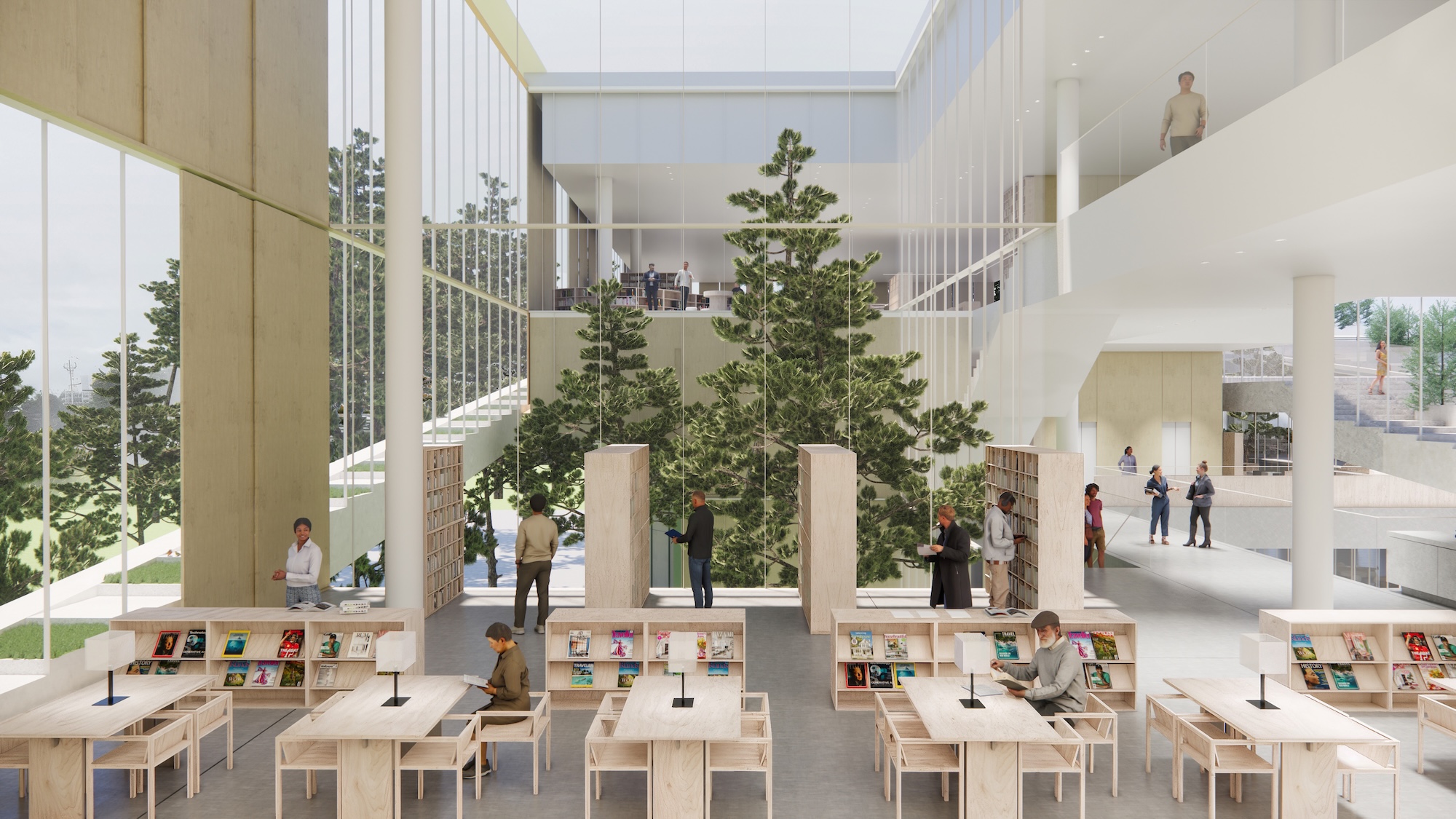
In contemporary society, however, the role of the library extends beyond preservation. No longer limited to the passive transmission of historical records, it is increasingly expected to operate as a cultural infrastructure—one that actively produces history through encounters, exchanges, and collective reflection. In this sense, the contemporary library must be understood as a spatial condition that enables history to remain active and continually renewed.
Such a landscape of living history allows individuals to encounter others beyond themselves, to exchange values, and to envision a more equitable social framework. This task carries particular weight in Gyeongju, a city whose ground contains a dense accumulation of historical layers formed over more than a millennium. Architecture in this context must engage these layers—not as static artifacts, but as a foundation upon which future cultural life can emerge.
The Gyeongju Cultural Library is located at the boundary between the city and the park. From the urban north, it operates as an extension of the city and an entrance to the park; from the park to the south, it becomes a threshold back toward the city. By actively mediating between these conditions, the library establishes itself as an architectural field in which history rises within the landscape of the park.
Through this mediation, the building connects what lies above and beneath the ground, inviting visitors to reflect, to share, and to reconsider the relationship between past, present, and future. It is in this sense that the project is conceived as “Gyeongju Cultural Library — The Landscape of Rising History.”