

Younghwa Church
| Completion year | 2026 |
| Site location | 서울 서초동 |
| Site area | 704.6m² |
| Building footprint | 351.88㎡ |
| Gross floor area | 2,408.26㎡ |
| Structural engineer | 은구조 |
| Mechanical engineer | 맥엔드 |
| Electrical engineer | 대경전기 |
| Contractor | 우리마을 |
| Lighting design | 뉴라이트 |


| Completion year | 2026 |
| Site location | 서울 서초동 |
| Site area | 704.6m² |
| Building footprint | 351.88㎡ |
| Gross floor area | 2,408.26㎡ |
| Structural engineer | 은구조 |
| Mechanical engineer | 맥엔드 |
| Electrical engineer | 대경전기 |
| Contractor | 우리마을 |
| Lighting design | 뉴라이트 |
영화교회, 일상적 특별성의 건축
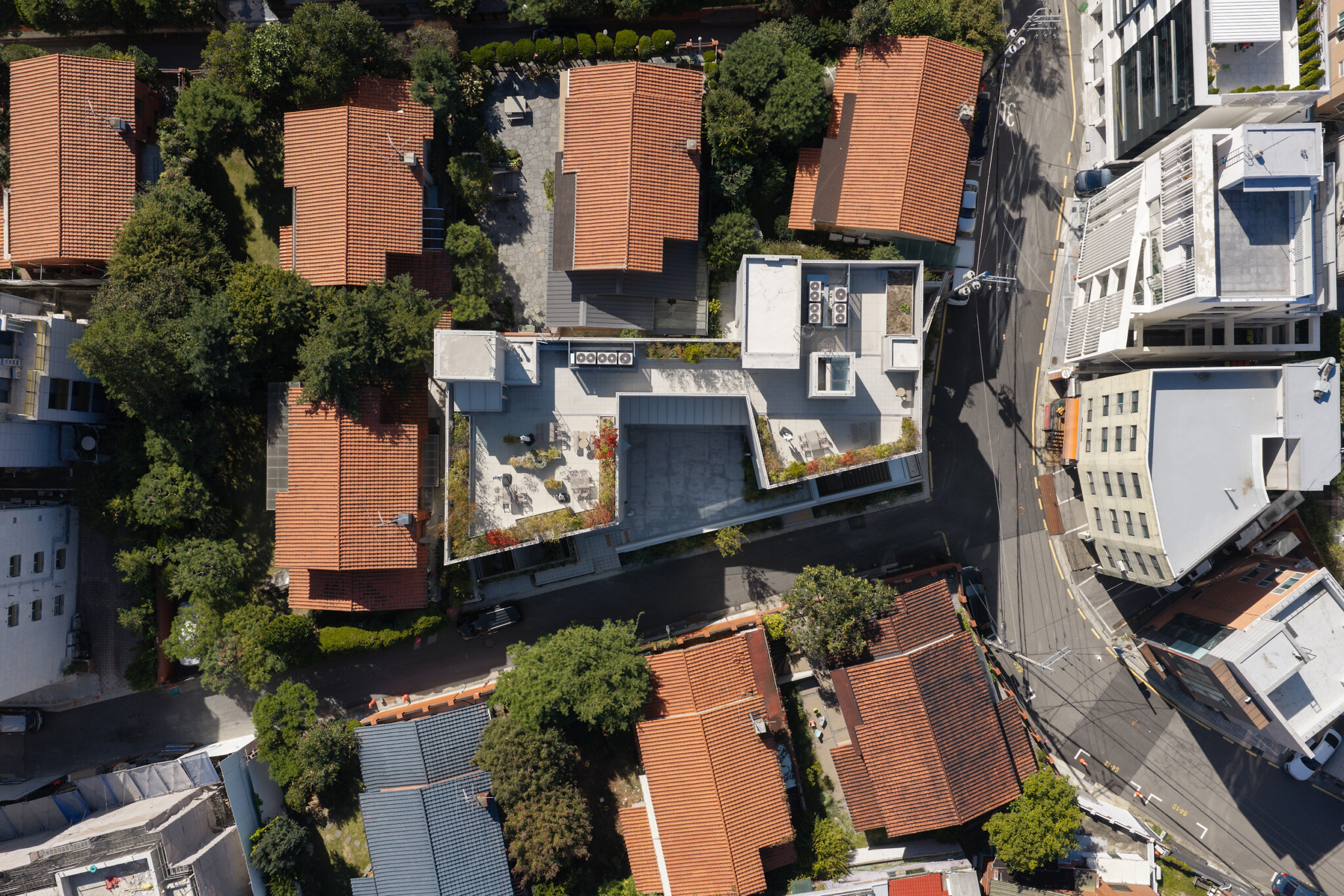
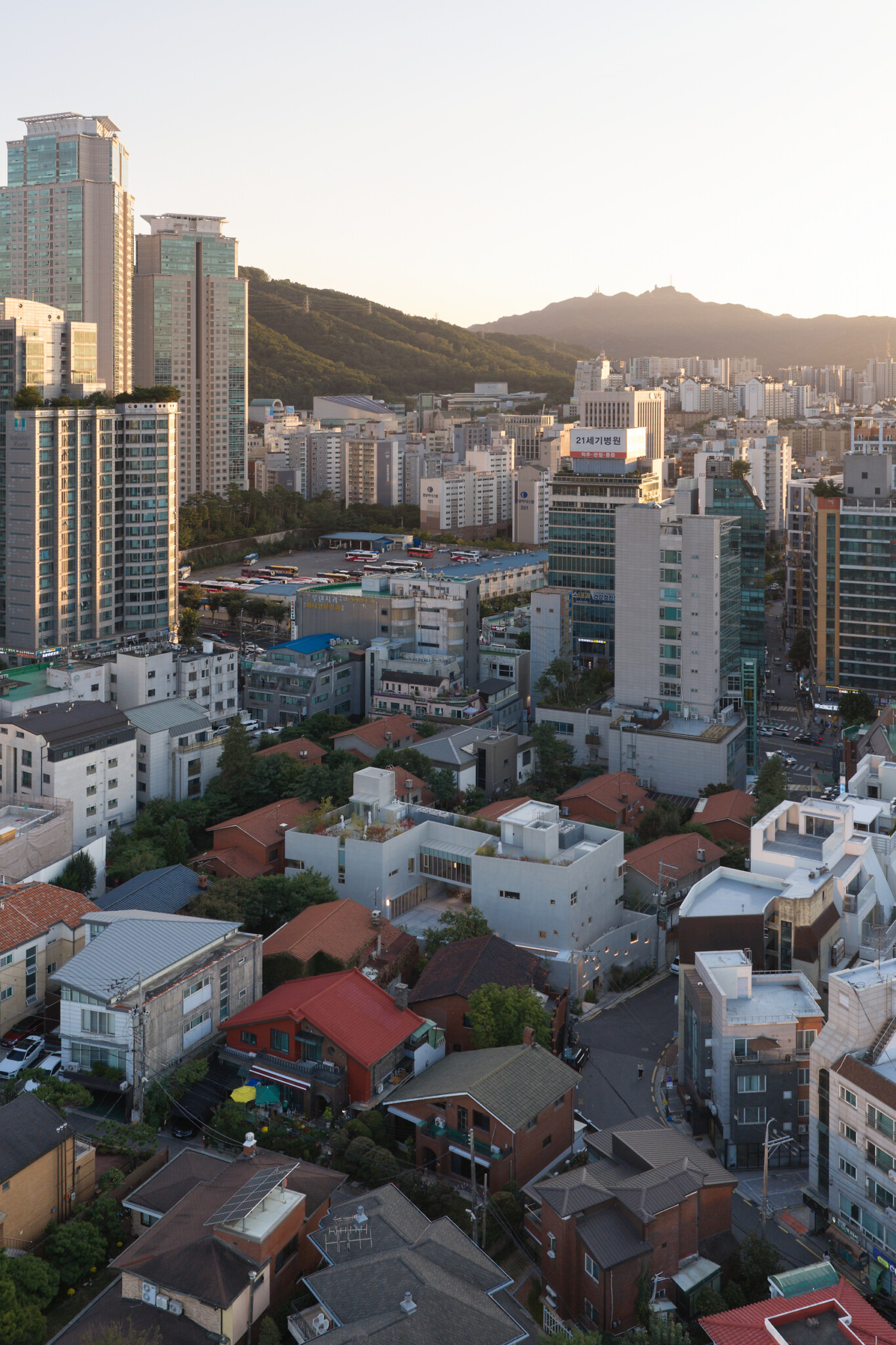
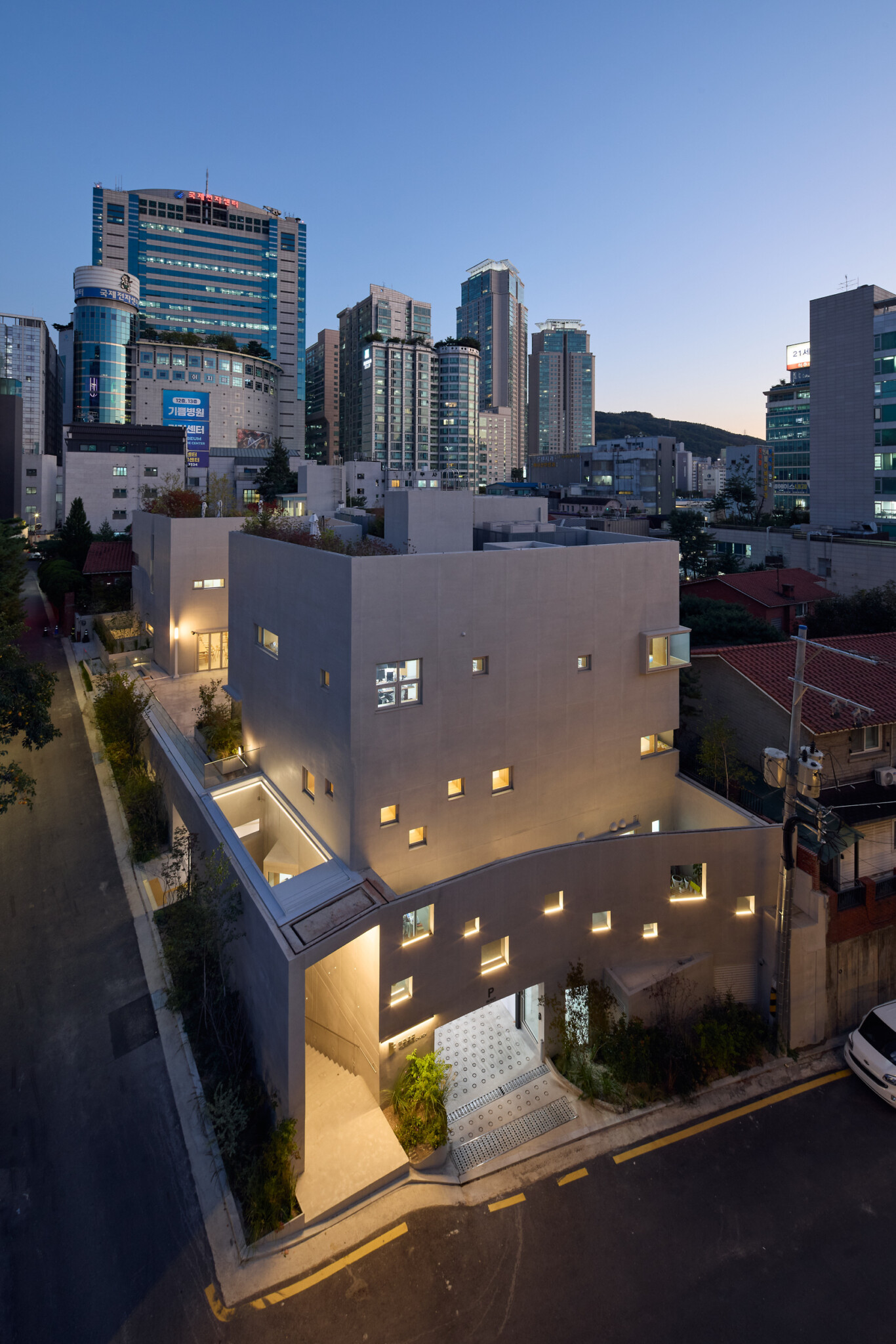
영화교회는 오랫동안 한 아파트단지 내의 상가시설에 터를 잡아 폭넓은 선교활동을 해오던 정통적 기독교 신앙공동체였다. 주변 아파트의 재개발로 이전이 불가피함에 따라 기존의 교회에서 1km 떨어진 서초동 단독주택지역의 두 집터에 신축하기로 결정한다. 70년대에 형성되기 시작한 이 단독주택지역은 높은 지가의 강남 속에 변모를 앞두고 있는 듯했다. 그러나 1종전용주거지역에 적용되는 법규는 시설 제한이 엄격하여 예배당 같은 집회시설은 통합된 두 필지의 지하에 둘 수 밖에 없었다. 낮은 건폐율을 갖는 지상부에는 교회의 부속시설들을 배치하지만 주변 주택들의 규모와 잘 맞아 어울린다.
교회는 부름 받은 이들이 모여 이루는 공동체이다. 세상 속에 일상을 살 수 밖에 없는 우리들이지만 잠시라도 부름 받은 곳으로 가서 속세 속의 자신을 되짚으며 다시 힘을 얻어 일상으로 돌아오게 하는 곳이 교회당이라면, 이 건축은 일상적이 아니라 특별해야 한다. 그러나 이 특별함이 형태화 되어 일상적 형태의 주변과 괴리된다면 교회 전체를 괴리적 공동체로 인식하게 할 수도 있을 것이다. 따라서 이 특정된 장소의 영화교회는 ‘일상적 특별성’ 혹은 ‘보편적 특별성’을 갖는 건축이 바람직 하였다.
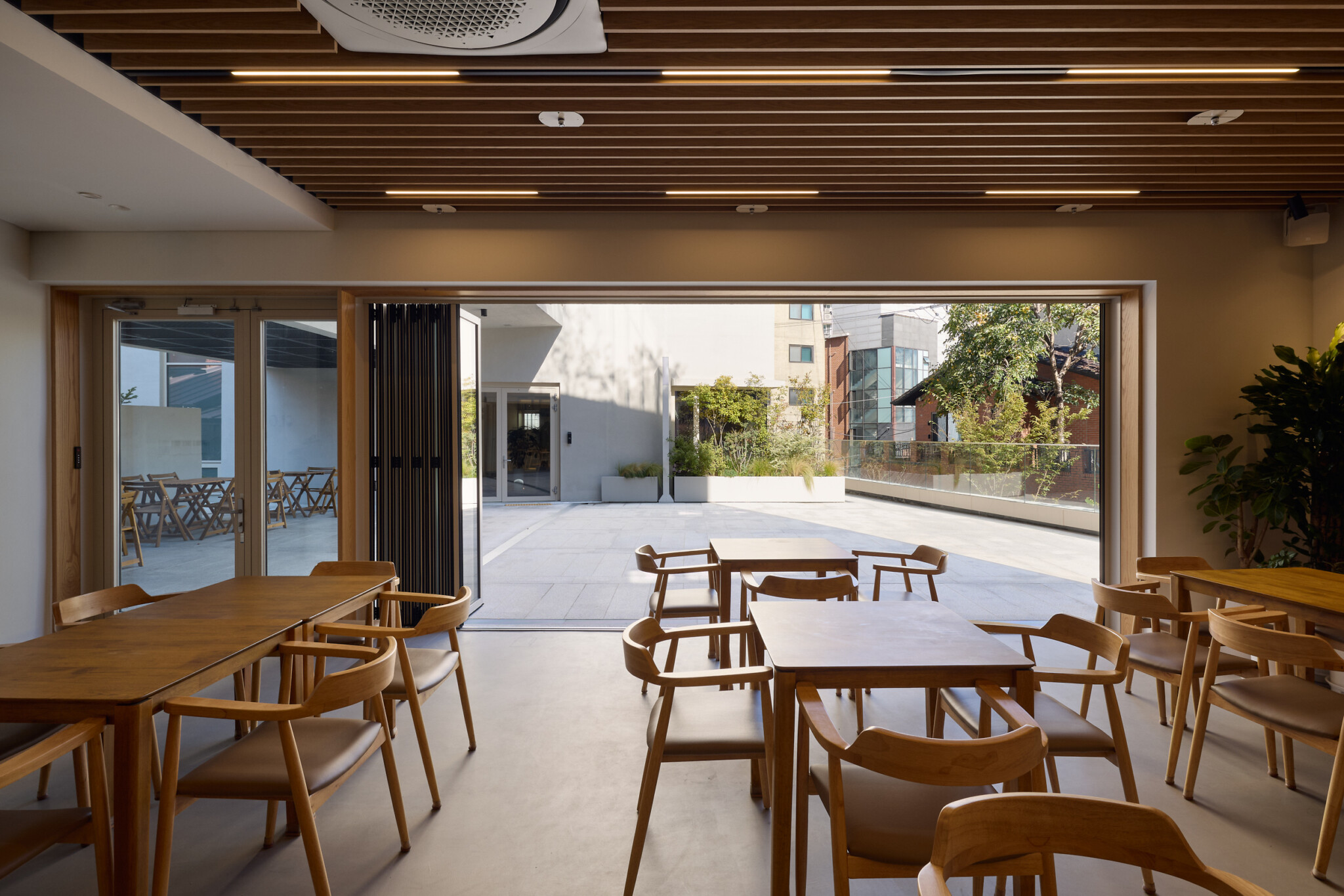
두 필지 위의 건축인 만큼 지상부에는 연결통로가 있는 두개의 매쓰를 두면 가운데 마당이 만들어지는데, 경사진 길이라 길에서 올라 평면이 된 이 마당은 그래서 세속을 다소 떠난다. 물론 이 교회의 신자만이 아니라 이곳을 지나는 누구에게도 개방되어 있으며 평일에는 이 마을의 공공영역으로 쓰일 수 있는 환대의 공간이다.
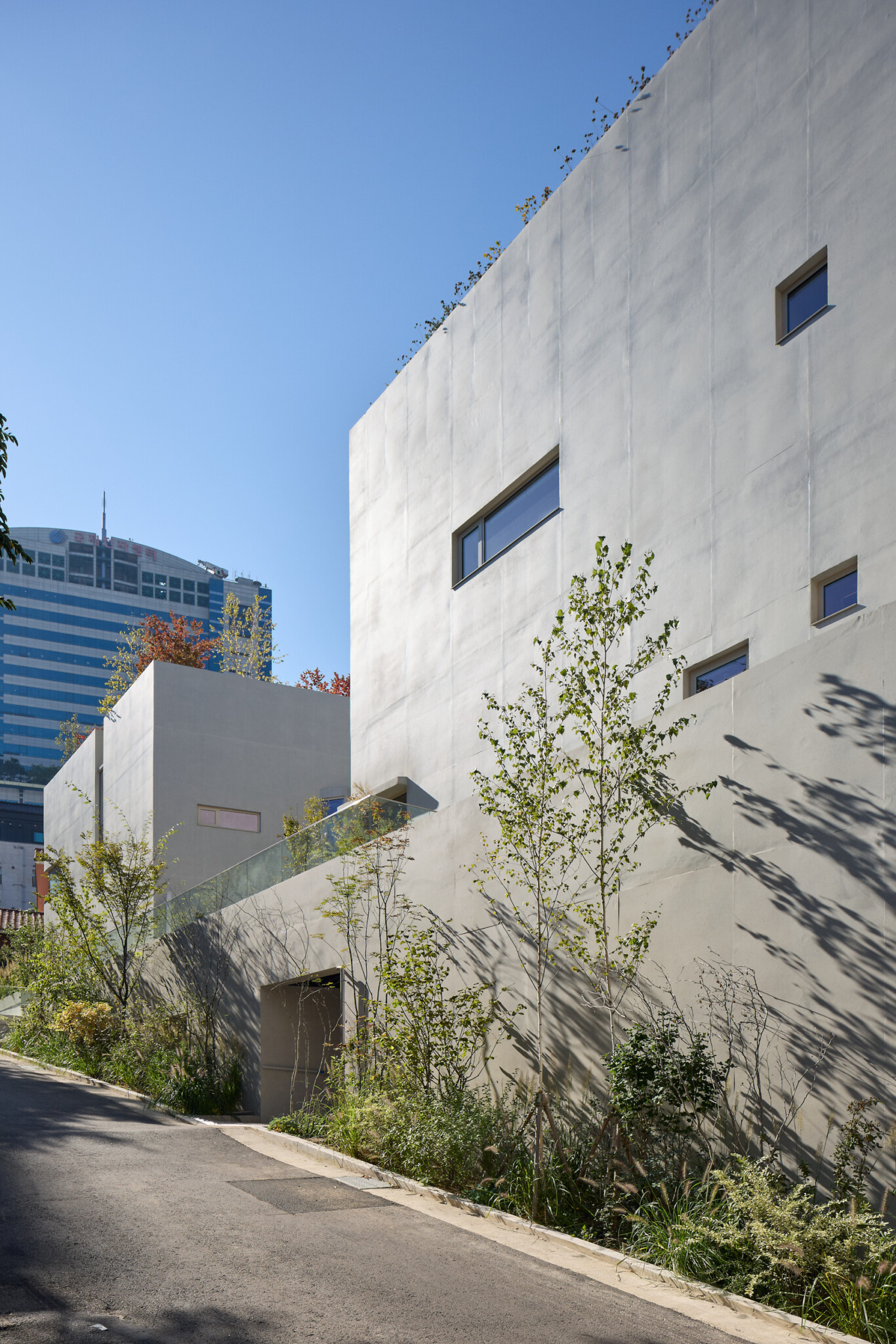
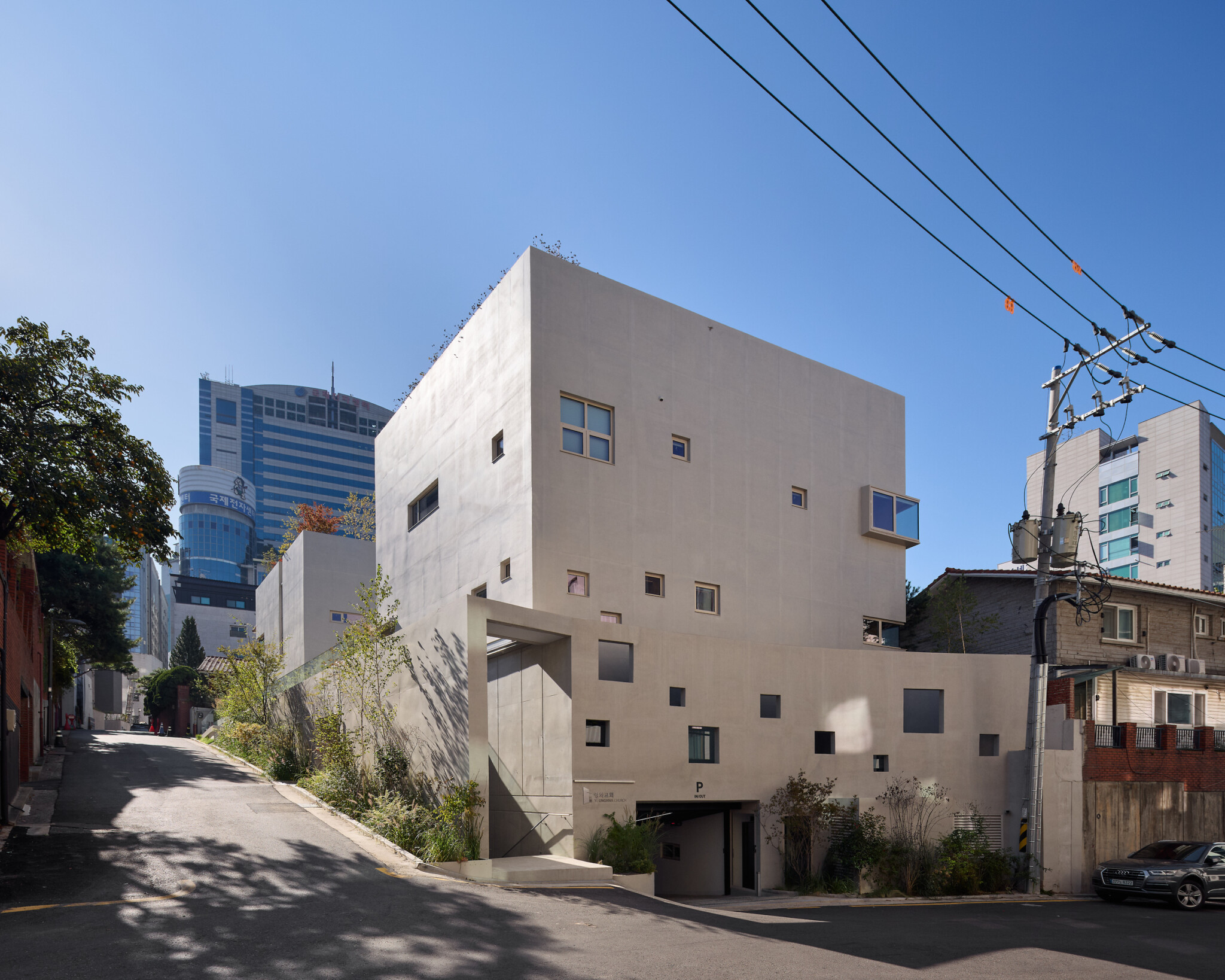
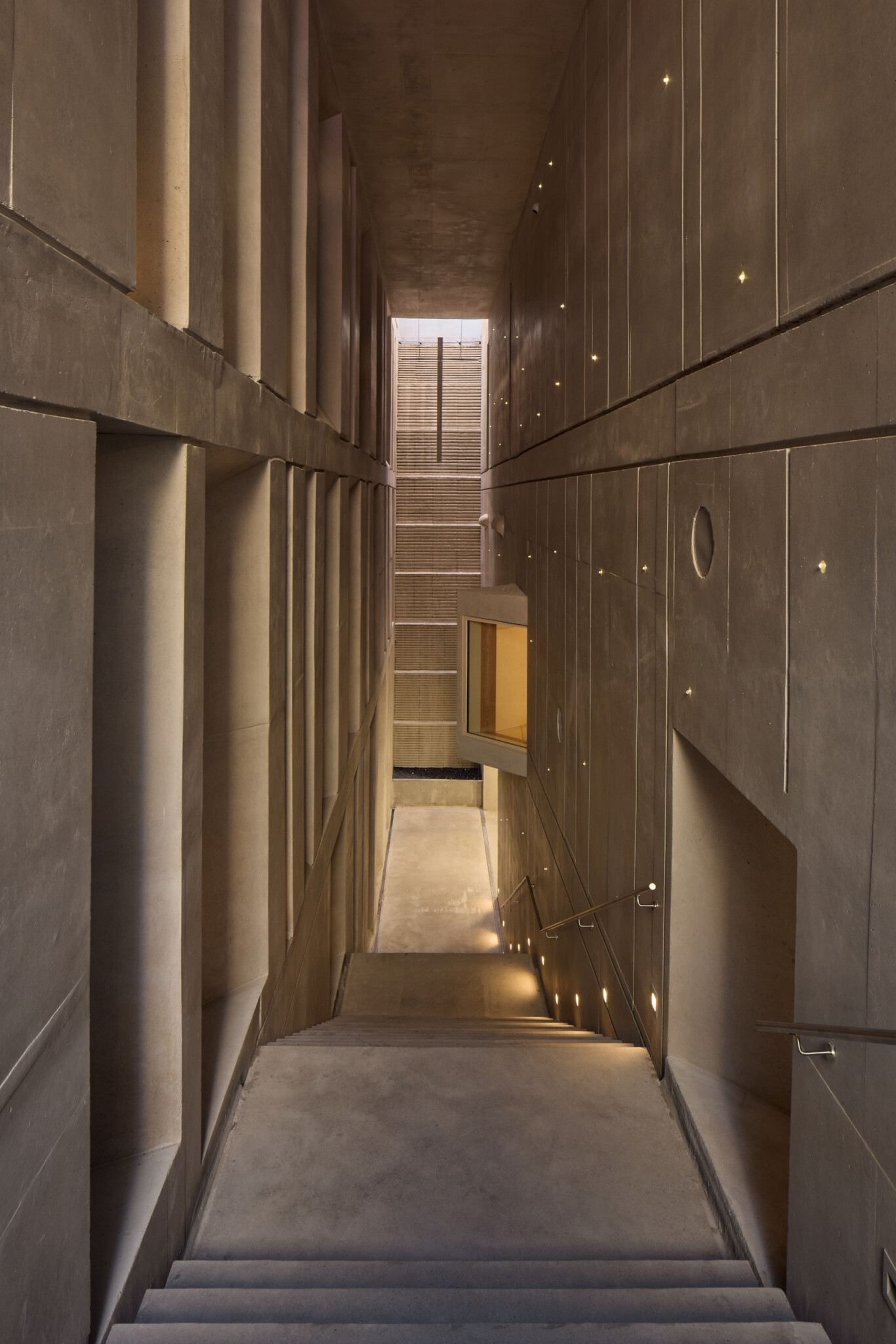
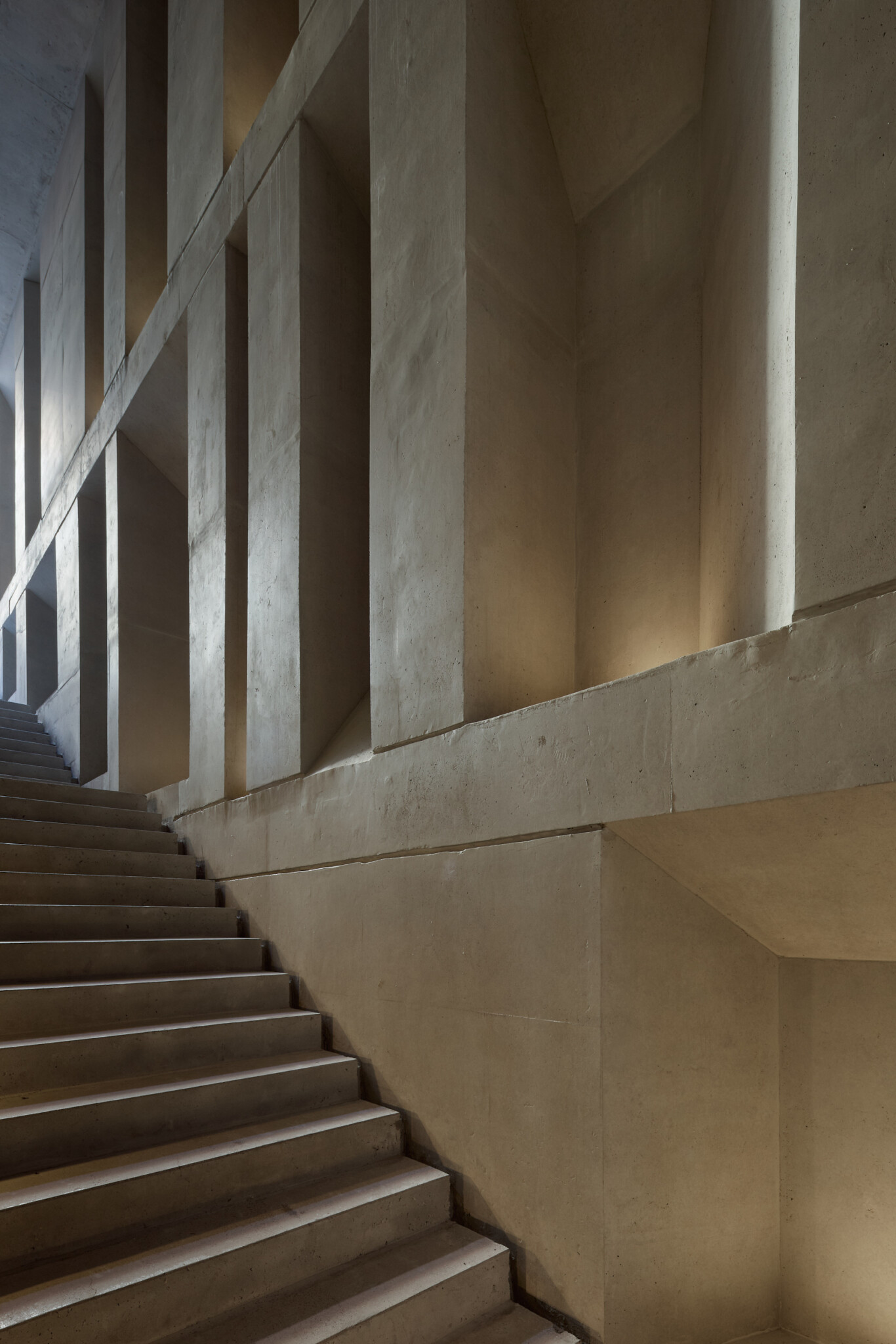
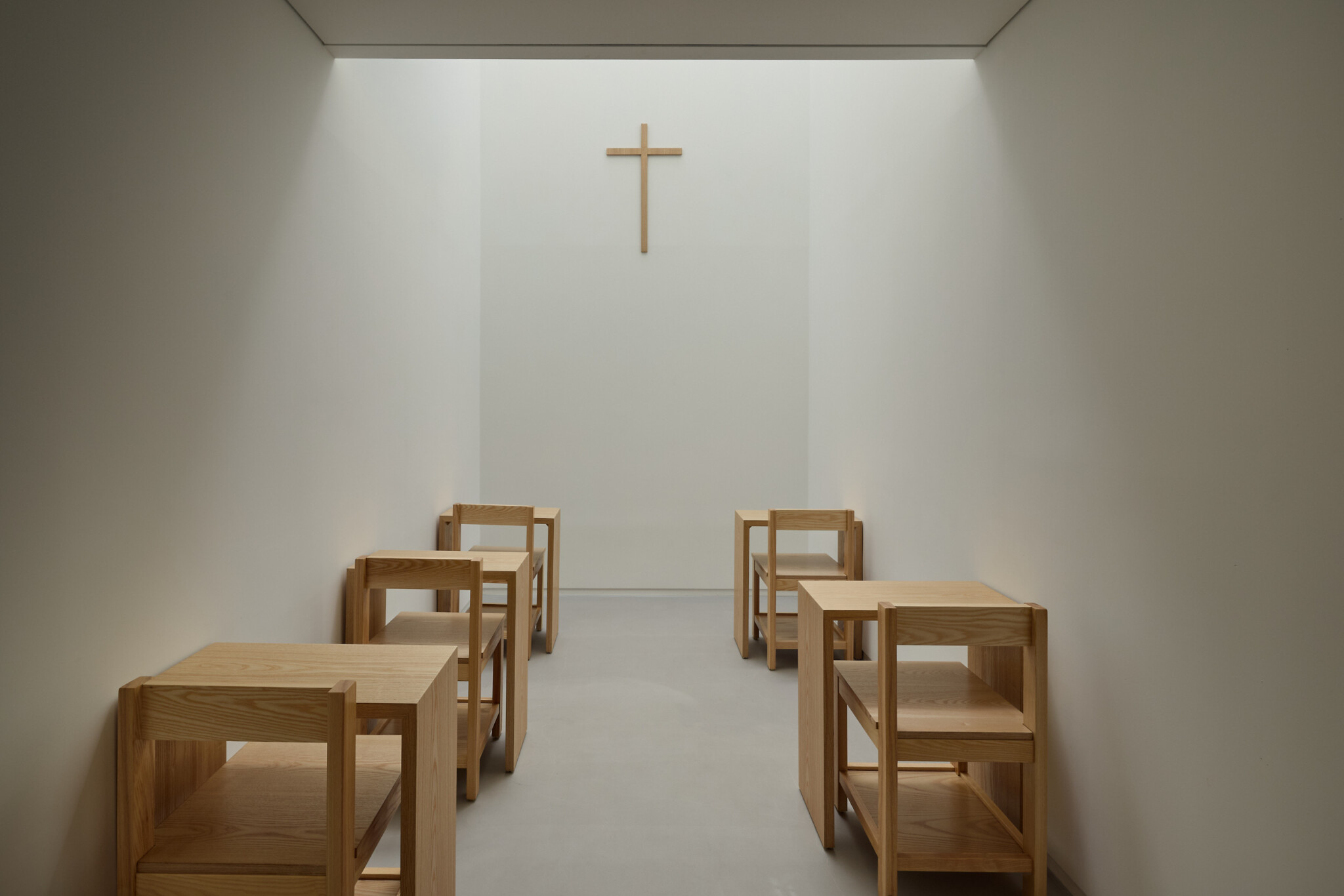
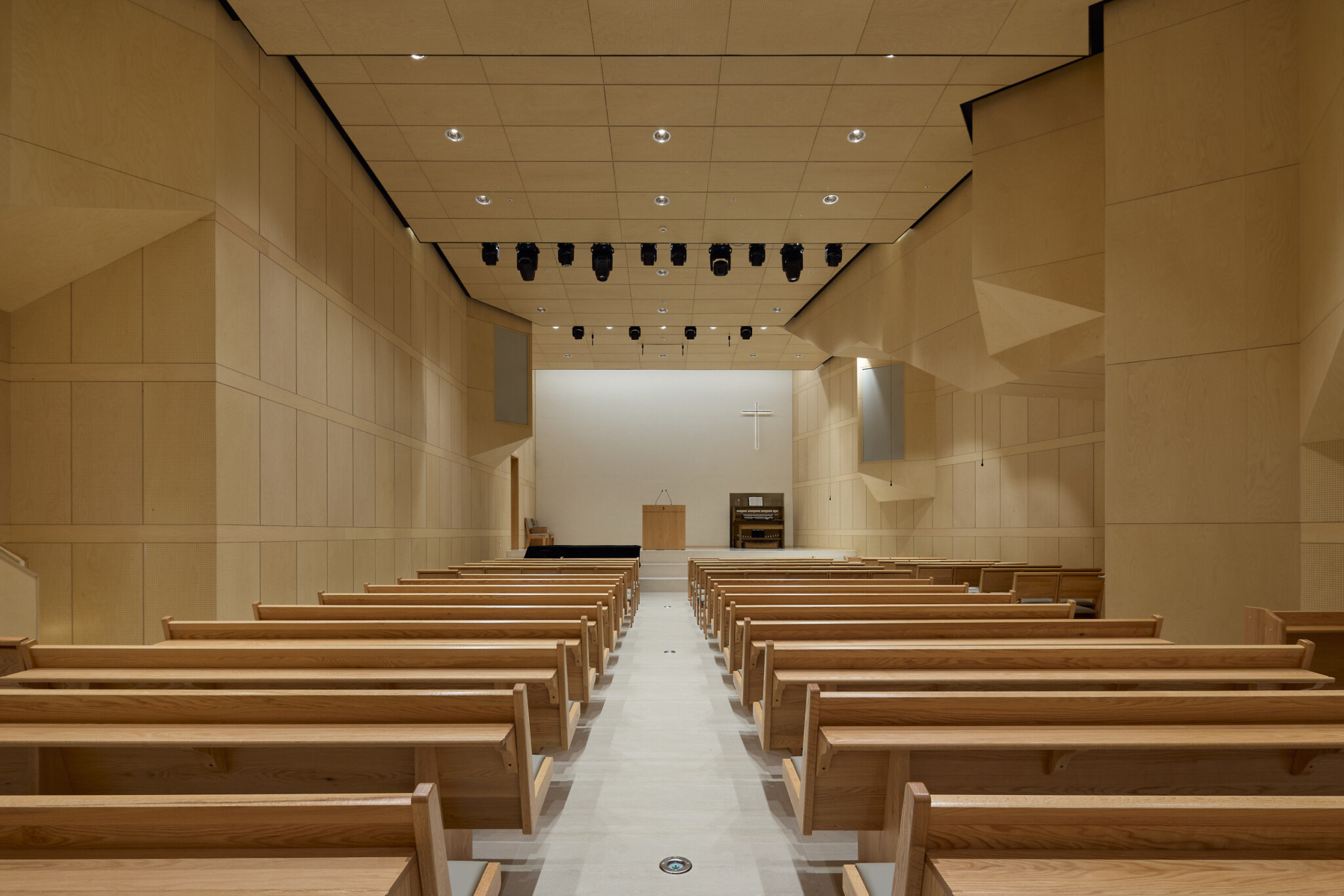
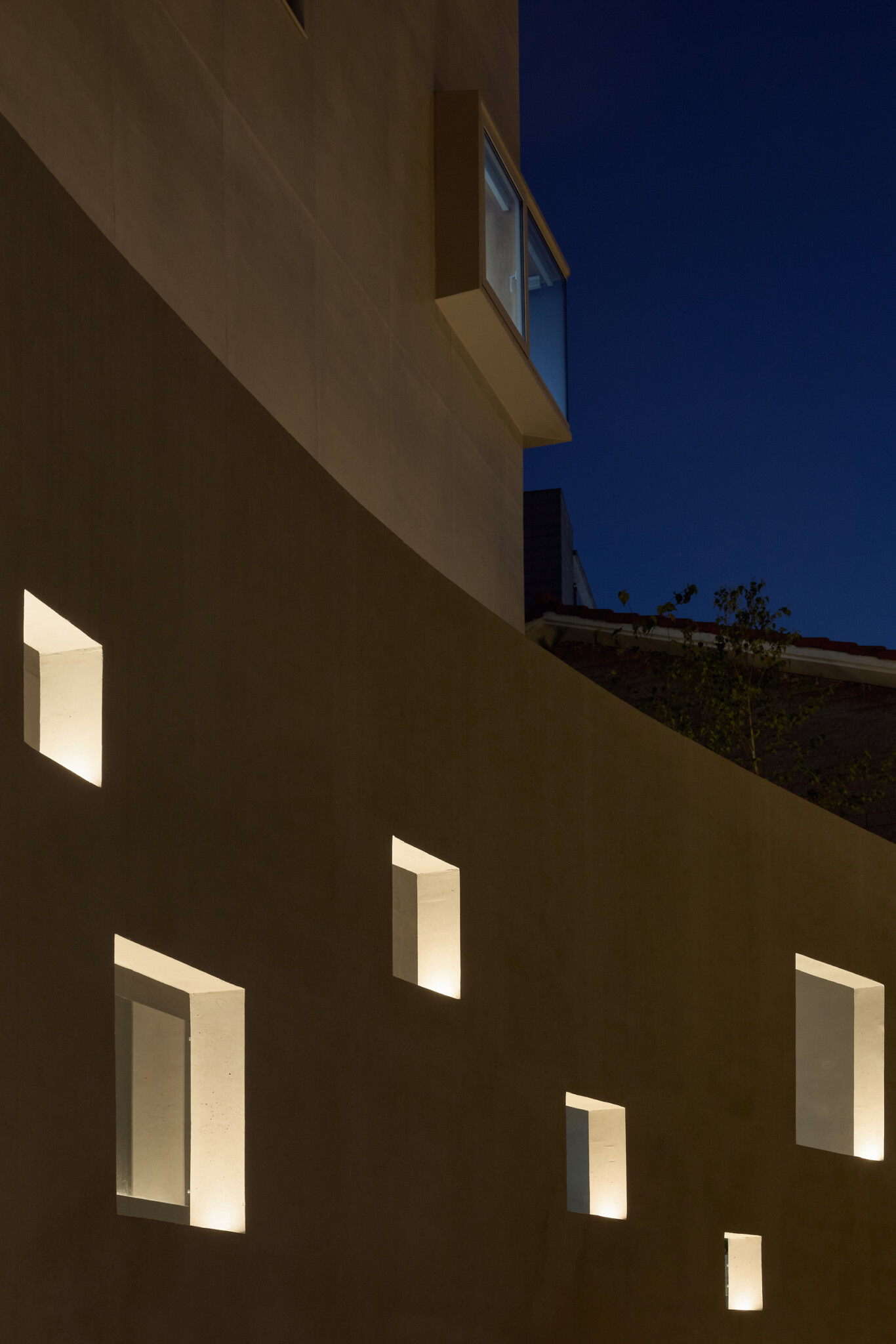
아래 길의 선형을 따라 휘어진 벽면의 끝에 다소 높은 개구부가 있는데 교회당으로 내려가는 출입구이다. 이 곳에 들어서면 10미터 아래로 계단길이 펼쳐지고 육중한 볼륨의 벽이 전혀 다른 풍경을 만든다. 이곳이 세상의 경계일까…. 아래로 발걸음을 내 딛으면 저 아래 맞은 편 벽면 위를 씻어 내리는 빛이 산란하며 위에 달린 십자가를 실루엣으로 나타나게 한다. 이미 다른 세상. 그리고 바닥에 다다라 문을 열고 내부 예배당으로 들어가면 펼쳐지는 따뜻하고 맑은 공간, 부름 받은 자들을 위한 공간이라고 여기며 그렸다.
Younghwa Church: Architecture of Everyday Sacredness
Younghwa Church is a traditional Christian faith community that had long been rooted in a commercial facility within a residential apartment complex, actively engaging in mission work throughout the neighborhood. When the surrounding area underwent redevelopment, relocation became inevitable. The church decided to build anew on two adjacent residential plots in Seocho-dong, approximately one kilometer away from its original site.
This single-family housing district, formed in the 1970s, lies within Seoul’s affluent Gangnam area and now appears to be on the cusp of transformation. However, strict zoning regulations in this Category 1 residential area limit the types of allowable facilities. As a result, the main sanctuary—classified as an assembly space—had to be placed underground. Above ground, the church’s ancillary facilities are distributed across the two plots, blending well in scale and appearance with the surrounding houses.
A church is a community formed by those who are called. Though we must live out our days in the secular world, the church offers a space where we momentarily return to the place of calling—where we pause, reflect on our lives, and gather strength before stepping back into the everyday. In this sense, a church must be special, not ordinary. Yet, if that specialness is overtly expressed in form and becomes alienated from the familiar appearance of its surroundings, the church may itself be perceived as an isolated entity within the community.
Thus, for Younghwa Church, situated in this particular residential context, the goal was to embody what we call an “everyday sacredness” or “universal exceptionalism.”
Because the building occupies two parcels of land, two separate volumes were placed above ground, connected by a passageway, forming a central courtyard between them. Set atop a gently sloping street, the courtyard is elevated above the road, subtly distancing it from the secular realm. Open to everyone—not just the church’s congregation—this space becomes a public zone for the neighborhood on weekdays, offering a sense of welcome and hospitality.
At one end of the curved wall, which follows the line of the street, is a tall opening that serves as the entrance to the sanctuary below. Upon entering, one descends a long stairway that drops 10 meters into a dramatic space framed by a massive wall, creating a scene entirely different from the outside world. One might wonder—is this the threshold of the sacred?
As you step further downward, light begins to scatter across the opposite wall, revealing the silhouette of a cross suspended above. A different world has already begun.
Opening the door at the base leads to the inner sanctuary—a warm, serene space drawn as a room for those who have been called.